
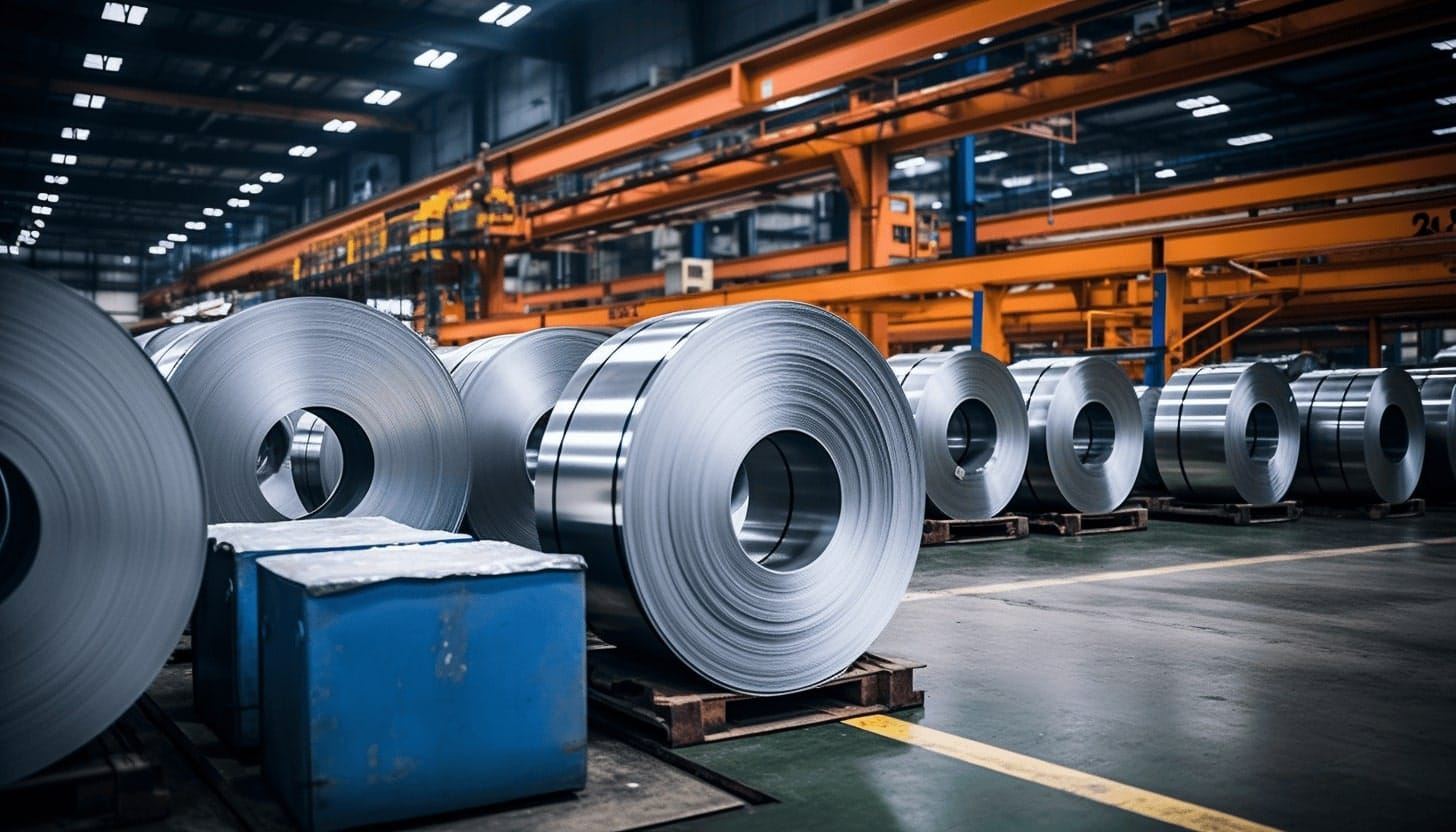
Continuous
coil anodizing.
Anodizing is an electrochemical process that grows a hard, protective oxide layer on aluminium. The layer is part of the metal itself, not a coating on top of it.
Five stages,
one line.
The coil unwinds at one end of the line and is rewound at the other. In between it passes through every bath without stopping, never clamped or racked.
- CleaningRemoves oils and residues left on the metal from rolling.
- EtchingEvens out the surface and sets the base look of the metal.
- AnodizingElectric current grows a hard oxide layer on the surface.
- ColouringFixes the shade inside the oxide, so it cannot peel or flake.
- SealingCloses the pores to lock in colour and corrosion resistance.
Coil or batch.
Both methods anodize aluminium. The difference is how the metal travels through the baths, and it shows in the surface you receive.
Continuous coil
The whole coil moves through all baths on one line.
Batch
Parts or sheets hang from racks and are dipped tank by tank.
Surface
Colour
Resources
Coil: Fewer chemicals, less water and energy. An efficient line keeps production costs down.
Batch: More chemicals, water and energy, plus racking and handling for each batch.